Streaming has transformed how we consume content, and I have found a way to make it even better. By pairing a high-performance device with a reliable service, I achieve seamless streaming that enhances my viewing experience. The key is understanding how these components work together.
IPTV, or Internet Protocol Television, is a method of delivering television content over the internet. Unlike platforms like Netflix, which simply require a browser, IPTV needs specialized hardware to access its vast libraries. An IPTV box serves as the crucial link between my television and the content provider, much like a traditional cable box.
Combining an Android device with a quality IPTV subscription has truly transformed my experience. I now enjoy thousands of live channels and on-demand content without the limitations of cable contracts. However, achieving smooth streaming requires careful selection of hardware, a compatible service, and proper configuration.
Key Takeaways
- IPTV is distinct from standard streaming services, requiring specialized hardware.
- An IPTV box acts as a middleman, enhancing flexibility and channel selection.
- Combining devices can unlock thousands of viewing options without cable constraints.
- Seamless streaming depends on hardware quality and service compatibility.
- Choosing the right setup can lead to a remarkable viewing experience.
Understanding IPTV and Android Boxes: My Streaming Essentials
In today’s digital age, the way we access television has changed dramatically. IPTV and dedicated devices like the IPTV box have become essential for anyone looking to enhance their viewing experience. These technologies work together to provide seamless access to a vast array of content.
IPTV, or Internet Protocol Television, is a technology that delivers televised content over the internet. This is distinct from services like Netflix or YouTube, which only require a browser. Instead, IPTV connects you to a specific server, allowing for live streaming and on-demand content. An IPTV box serves as the critical gateway between your television and the content provider’s servers, decoding signals to display live channels and on-demand libraries directly on your screen.
When I use an Android box, it transforms my standard television into a Smart TV experience. This device runs on the Android operating system, enabling access to the Google Play Store for downloading various apps. I can easily install popular streaming services like Amazon Prime Video, YouTube, and Netflix, along with specialized IPTV apps.
Here’s how it works: when I select a channel on my IPTV app, the Android box sends a request through my internet connection to the IPTV service provider’s server. The server then streams the content back to my device in real time using protocols optimized for television delivery. This process ensures smooth streaming without the delays often associated with traditional cable services.
It’s important to understand the differences between dedicated IPTV boxes and Android TV boxes. Dedicated IPTV boxes are purpose-built for streaming live television, offering cable-like interfaces. In contrast, Android TV boxes provide broader versatility, supporting gaming, web browsing, and multiple streaming platforms alongside IPTV functionality.
There are two main variants of the Android operating system to consider:
- Android TV OS: This version is optimized for large screens, offering a clean interface and better app compatibility.
- Standard Android OS: While it provides more flexibility for sideloading applications, it may be less stable for television use.
Understanding how IPTV operates through an Android box is essential for anyone looking to enhance their streaming experience. The quality of your picture, app responsiveness, and overall streaming reliability are all influenced by this foundational knowledge.
For more insights into IPTV types and benefits, check out this guide.
Why I Chose IPTV and Android Box for My Streaming Needs
The evolution of television technology has opened up a world of possibilities for viewers. I chose IPTV and an Android box because this combination delivers superior 4K picture quality with HDR support. This setup provides access to thousands of international and Canadian channels, allowing me to customize my viewing experience far beyond what traditional cable or standalone smart TV apps can offer.
Personal Benefits: Picture Quality and Content Variety
One of the main reasons I made this choice is the stunning picture quality. Modern devices support 4K resolution, HDR10, and even Dolby Vision. This means I enjoy crisp, vibrant images that make live sports and movies feel immersive on my large-screen television.
Additionally, the content variety has been a game-changer for my household. Instead of being locked into a fixed cable package, I now access thousands of live channels. This includes Canadian networks, international programming, specialized sports feeds, and extensive on-demand libraries, all through a single device.
Enhancing My Entertainment Experience in Canada
The combination of IPTV and an Android box specifically enhances my entertainment experience as a Canadian viewer. I gain access to local Canadian content alongside global channels that traditional cable providers often do not offer or charge exorbitant fees for.
Flexibility is another major advantage. Unlike cable subscriptions with rigid channel bundles, my IPTV setup allows me to choose providers that cater to my interests. Whether I want to watch live NHL games, international news, or niche documentary channels, I have the freedom to customize my viewing.
Moreover, the Android box platform supports multiple IPTV apps simultaneously. This means I can switch between different service providers or use specialized apps like TiviMate or IPTV Smarters without needing separate hardware.
On-demand content capabilities have fundamentally changed how I consume media. I’m no longer bound by broadcast schedules. I can watch movies, series, and catch-up TV whenever it fits my schedule, all in the same high quality as live broadcasts.
Lastly, this setup has proven to be more cost-effective in the long run compared to traditional cable subscriptions in Canada. It delivers superior picture quality and exponentially more content options.
| Device | Picture Quality | HDR Support | User Interface |
|---|---|---|---|
| Formuler Z8 | 4K Ultra HD | Yes | Intuitive |
| BuzzTV XR4000 | 4K Ultra HD | Yes | Intuitive |
Key Features to Consider When Choosing Android Boxes for IPTV
The landscape of home entertainment is evolving, and understanding the right features can enhance your experience. When selecting an Android box for streaming, several critical aspects come into play. These features directly influence performance, usability, and overall enjoyment.
Processing Power and RAM for Smooth Streaming
Processing power is the single most critical factor. IPTV apps decode video streams in real time. A weak processor can lead to frustrating lag, delayed menu responses, and stuttering during high-definition playback. I recommend a minimum quad-core chip, with an octa-core processor being the optimal choice for future-proof performance.
RAM also plays a vital role in your streaming experience. With 2GB, you can manage basic streaming tasks. However, 4GB allows for smooth transitions between live TV, the electronic program guide, and other apps. For power users, 8GB is ideal, accommodating multiple applications and ensuring instantaneous responsiveness.
Connectivity, Storage, and Video Format Support
Connectivity options are the backbone of seamless streaming. Wi-Fi 6 delivers faster, more stable wireless performance. However, I always prefer Gigabit Ethernet for the most reliable connection, especially when streaming high-definition content that demands consistent bandwidth.
Internal storage is another important feature. While IPTV apps are typically small, cached data, app updates, and recordings can quickly consume space. A minimum of 32GB to 64GB is ideal for long-term use without constant storage management.
Video format support is crucial for quality streaming. A good device must decode H.265 (HEVC) for efficient 4K streaming and support AV1 for next-generation content delivery. Additionally, handling HDR10 and Dolby Vision ensures the best possible picture quality on compatible televisions.
Lastly, check for Bluetooth 5.0 or higher. This feature allows you to connect wireless peripherals like gaming controllers and keyboards, expanding your device’s functionality beyond just streaming.
For a comprehensive look at the best options available, consider checking out this guide.
My Top Picks: Best Android Boxes for IPTV in 2026
The world of streaming devices is filled with exciting options that can elevate your viewing experience. In 2026, I have narrowed down my top picks for the best devices that cater specifically to IPTV needs. Each of these devices stands out for its unique features and performance.
Nvidia Shield TV Pro (2026 Edition)
I crown the Nvidia Shield TV Pro (2026 Edition) as the undisputed king of IPTV streaming. This device features the updated Tegra X1+ processor with advanced AI upscaling. It makes even 1080p streams look stunningly close to native 4K on my large-screen television.
With 3GB of RAM and a rock-solid Android TV OS, it delivers the smoothest, most stable IPTV experience I’ve ever tested. This device supports virtually every video codec, including H.265, AV1, HDR10, Dolby Vision, and Dolby Atmos. This ensures flawless decoding without stuttering, making it worth the premium price for serious streamers.
Formuler Z12 Ultra
The Formuler Z12 Ultra is the ultimate dedicated IPTV powerhouse. Designed from the ground up for live television streaming, it features the industry-leading MYTVOnline interface. This interface provides a cable-like experience with an intuitive electronic program guide and lightning-fast channel switching.
With 4GB of RAM and a massive 128GB of internal storage, it offers extensive DVR recording capabilities. Its cutting-edge connectivity suite, including WiFi 6E and Gigabit LAN, ensures interference-free streaming.
BuzzTV XRS 4900 and SARO GT+
I recommend the BuzzTV XRS 4900 as the premier Canadian-brand choice. Built with 4GB of RAM and an enormous 128GB of storage, it’s engineered for heavy IPTV users. This device is known for its durability and consistent performance during marathon viewing sessions.
The BuzzTV SARO GT+ is a compelling mid-range option running the latest Android 13. It features expandable storage and comes with the BT350 remote control, making it an excellent choice for Canadian streamers.
Budget-Friendly Options Worth Considering
If you’re looking for budget-friendly alternatives, consider the Xiaomi Mi Box S 3rd Gen. It offers 32GB of storage, Wi-Fi 6 connectivity, and Dolby Vision support for under $140. Another great option is the Chromecast with Google TV (4K), which is ultra-compact and affordable, providing a clean interface and fast updates.
| Device | RAM | Storage | Special Features |
|---|---|---|---|
| Nvidia Shield TV Pro | 3GB | 16GB | AI Upscaling, Supports All Codecs |
| Formuler Z12 Ultra | 4GB | 128GB | MYTVOnline Interface, WiFi 6E |
| BuzzTV XRS 4900 | 4GB | 128GB | Durable, High Performance |
| BuzzTV SARO GT+ | 2GB | 16GB (Expandable) | Latest Android 13 |
| Xiaomi Mi Box S 3rd Gen | 2GB | 32GB | Dolby Vision Support |
| Chromecast with Google TV | 2GB | Not Specified | Compact, Strong App Support |
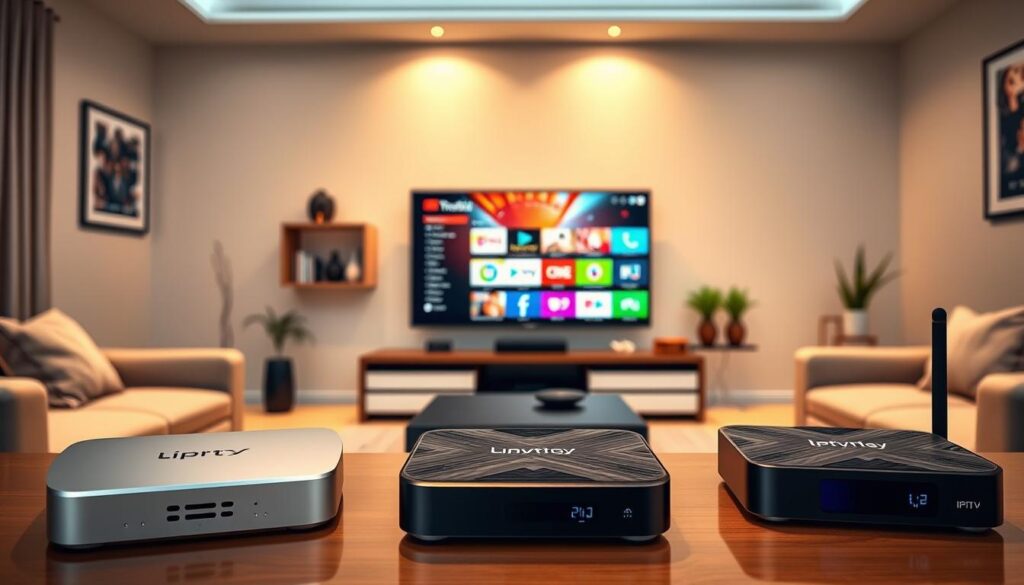
IPTV Box vs. Android TV Box: Which One Fits Your Needs?
Choosing the right streaming device can significantly impact your viewing experience. The decision between a dedicated IPTV box and an Android TV box often comes down to personal preferences and viewing habits. Each type of device offers unique advantages tailored to different needs.
For those who prioritize a cable-like experience, a dedicated IPTV box is the way to go. Devices like the Formuler Z12 Ultra or MAG 555 run custom software optimized for television streaming. This means you get a smooth experience with instant channel switching and intuitive electronic program guides. These interfaces are designed around remote control use, making navigation straightforward.
Purpose-Built Streaming vs. Versatility
On the other hand, Android TV boxes focus on versatility. They can transform any television into a full Smart TV, capable of running various apps like Netflix, YouTube, and gaming applications. This makes them ideal for users who want an all-in-one entertainment hub. However, while they provide more features, they may not deliver the same quality of IPTV streaming as dedicated boxes.
Ease of Use and User Interface Differences
When it comes to ease of use, dedicated IPTV boxes often win. They boot directly into the television experience, allowing users to access content without navigating through complex app drawers or settings menus. My family finds these devices simpler to operate, especially for less tech-savvy members.
Android TV boxes have improved their IPTV capabilities with powerful hardware and optimized apps like TiviMate. This makes them a viable choice for users willing to invest time in configuration. However, if your viewing primarily consists of live IPTV channels, a dedicated box will provide the best experience.
Ultimately, assessing your primary use case is crucial. If 90% of your viewing is live IPTV channels, a dedicated box is the better choice. Conversely, if you regularly switch between IPTV and other streaming services, the versatility of an Android TV box may justify the trade-off in IPTV-specific optimization.
Choosing the Right IPTV Service Provider for Canadian Viewers
Finding the best IPTV service provider can make all the difference in your entertainment options. As a Canadian viewer, I understand the importance of selecting a service that aligns with my preferences and device compatibility.
Before diving into content packages, I always check for compatibility with my specific Android device. Not every IPTV service works optimally with every device. I ensure that the provider supports my device’s app ecosystem, whether it’s Android TV OS or a custom platform like MYTVOnline.
Next, I evaluate the channel lineup. A good provider should offer a comprehensive selection of Canadian channels, including local networks and sports coverage. I also look for international programming that reflects Canada’s multicultural population, along with robust on-demand libraries featuring movies and series.
When considering pricing, I find that while budget IPTV services exist, extremely cheap options often come with drawbacks like server instability and buffering during peak hours. I recommend investing in mid-range to premium services that demonstrate consistent uptime and responsive customer support.
Quality factors also play a crucial role. Server location is vital for Canadian viewers, as providers with North American infrastructure typically offer lower latency and more stable streams. This directly impacts the seamless streaming experience I expect.
Lastly, I advise taking advantage of trial periods. Testing a provider’s stream quality during both off-peak and prime-time hours can help evaluate the electronic program guide’s accuracy. It’s essential to confirm that catch-up TV and DVR functionality work reliably before committing to a long-term subscription.
| Provider | Channels | On-Demand Content | Price |
|---|---|---|---|
| Provider A | 150+ | Yes | $25/month |
| Provider B | 200+ | Yes | $30/month |
| Provider C | 100+ | No | $20/month |
Legal Considerations of Using IPTV Services in Canada
Navigating the complexities of IPTV legality in Canada requires a clear understanding of the technology and its implications. The core of the matter is that the technology itself is legal. However, the legality of any given service depends on whether the provider has secured proper licensing for the content they distribute.
Many Canadian streamers misunderstand this fundamental legal principle. IPTV is simply a method of delivering television content over the internet. But, the legality hinges entirely on the service provider’s compliance with copyright laws. Legitimate services typically offer transparent pricing, verifiable business addresses, and reliable customer support.
Understanding IPTV Legality
To distinguish between legitimate and questionable services, I look for certain red flags. Providers that promise every premium channel for a fraction of the market rate often raise suspicions. It’s essential to evaluate the legality of the channels and content they offer.
Using unlicensed IPTV services can lead to serious legal consequences. These may include copyright infringement issues, sudden service shutdowns, and security vulnerabilities. Canadian internet service providers monitor network traffic and may send warning notices if they detect streaming from known unlicensed sources.
How to Avoid Illegal Content and Stay Safe
To protect myself, I always choose providers that demonstrate legitimate licensing. Additionally, I avoid services that offer thousands of channels at suspiciously low prices. I also prioritize using a quality VPN to maintain privacy while streaming.
Here are some practical tips for staying safe:
- Research providers thoroughly before subscribing.
- Look for independent reviews from other Canadian users.
- Avoid services requiring payment through untraceable methods like cryptocurrency.
- Trust your instincts when a deal seems too good to be true.
Several legitimate IPTV services operate in Canada through established telecommunications companies. These providers offer fully legal access to live television and on-demand content, ensuring peace of mind and reliable service.
Using a VPN is not just about accessing geo-restricted content. It’s an essential privacy tool that protects my identity and browsing activity from my internet provider and any third parties. This adds a critical layer of security to my streaming setup, regardless of the legal status of any particular service.
| Provider | Licensing Status | Content Variety | Price |
|---|---|---|---|
| Provider A | Licensed | 150+ Channels | $25/month |
| Provider B | Licensed | 200+ Channels | $30/month |
| Provider C | Unlicensed | 100+ Channels | $20/month |
Why I Always Use a VPN When Streaming IPTV
With the rise of online streaming, maintaining my privacy while enjoying content is essential. I always use a VPN with my IPTV and Android box setup. This tool encrypts my streaming activity, which prevents my internet service provider from throttling my connection based on data type. It also protects my privacy by hiding my IP address and viewing habits.
Moreover, a VPN allows me to securely access geo-restricted content that might otherwise be blocked in Canada. This means I can enjoy a wider range of channels and services, all while potentially improving stream stability through optimized routing.
Protecting Privacy and Avoiding ISP Throttling
Internet service providers in Canada actively monitor network traffic. They commonly throttle bandwidth when they detect streaming activity. By encrypting all data through a VPN, my IPTV streams become invisible to my ISP. This prevents them from deliberately slowing my connection during peak viewing hours, ensuring consistent, buffer-free playback.
Accessing Geo-Restricted Content Securely
Using a VPN also enables access to geo-restricted content that would otherwise be unavailable in Canada. By connecting to servers in different countries, I can legitimately access international IPTV services, regional sports broadcasts, and content libraries locked to specific geographic locations. This dramatically expands my entertainment options.
While some users worry that VPNs may slow down internet speed, a quality VPN service like PureVPN can actually enhance my IPTV experience. It routes traffic through less congested pathways and prevents ISP throttling. This results in more stable streams and fewer buffering interruptions.
Installing and configuring a VPN on my Android box is straightforward. Modern VPN apps are available in the Google Play Store, install in minutes, and offer one-click connection to optimized servers. This makes privacy protection effortless, even for users who aren’t technically inclined.
When choosing a VPN for IPTV streaming, I recommend looking for specific features:
- Fast server networks with multiple Canadian and international locations.
- Unlimited bandwidth to support 4K streams without data caps.
- A kill switch that automatically disconnects the internet if the VPN drops, preventing accidental exposure.
- Compatibility with Android TV OS for seamless integration.
Using a VPN isn’t just about hiding questionable activity; it’s a fundamental privacy tool that every internet user should employ. For IPTV streaming specifically, it provides the dual benefits of protecting my personal data while simultaneously improving my overall streaming quality and content accessibility.
Step-by-Step Setup for Seamless IPTV Streaming on Android Box
Setting up my device for seamless streaming is a straightforward process. By following these steps, I ensure a reliable connection and optimal performance for my viewing experience.
Connecting Your Android Box to the Internet
The first step is to establish a strong internet connection. I always prefer using a Gigabit Ethernet cable directly from my router to the device. This setup eliminates wireless interference, providing consistent bandwidth and low latency. However, if Ethernet isn’t practical, I connect to the 5GHz Wi-Fi band. This is crucial as it reduces congestion and enhances streaming quality.
Installing and Configuring IPTV Apps
Next, I navigate to the Google Play Store on my device. I search for trusted IPTV applications like TiviMate or IPTV Smarters. It’s essential to download the version optimized for my device, ensuring compatibility. Once installed, I launch the app and follow these steps:
- Select the option to add a new playlist or provider.
- Enter the server URL provided by my IPTV service.
- Input my username and password accurately.
- Allow the app to download the channel list and electronic program guide (EPG) data.
Optimizing Settings for Best Performance
To enhance my streaming experience, I optimize several settings within the app:
- Enable hardware acceleration: This leverages the device’s GPU for smoother video decoding.
- Adjust buffer size: I set this based on my connection stability—larger buffers for less stable connections, smaller for reliable ones.
- Select the appropriate video decoder: Choosing one that matches my device’s hardware capabilities is crucial.
Regular updates are also vital. I make it a point to check for software updates for both the operating system and the IPTV apps. This ensures I benefit from the latest performance improvements and security patches.
To achieve optimal streaming quality, I recommend a minimum internet speed of 25 Mbps for HD content and 50 Mbps for 4K streaming. Additionally, I can customize settings like scheduling automatic EPG updates during off-peak hours and configuring parental controls for family-friendly viewing.
For a detailed guide on how to stream effectively, you can refer to this guide.
Troubleshooting Common IPTV Streaming Issues
When streaming problems arise, having a systematic approach to troubleshooting can save time and enhance enjoyment. Here are some common issues I encounter and how I resolve them effectively.
Fixing Buffering and Connectivity Problems
Buffering is one of the most common and frustrating issues in streaming. To tackle this, I first check my internet speed. Most IPTV providers recommend a minimum of 25 Mbps for HD content and 50 Mbps for 4K streaming.
If buffering persists, I switch from Wi-Fi to a wired Ethernet connection. This eliminates wireless interference and provides stable bandwidth to my device. If Ethernet isn’t an option, I may lower the stream quality from 4K to 1080p to reduce bandwidth demands.
Additionally, I clear the IPTV app’s cache, which can accumulate and slow down performance over time. Closing background apps and rebooting both the device and router can also resolve temporary network glitches.
Resolving App Crashes and Audio Sync Issues
App crashes can disrupt my viewing experience. I usually start by restarting my device, which resolves most temporary software conflicts. Next, I check for updates for both the IPTV app and the operating system. If crashes continue, I uninstall and reinstall the app to eliminate corrupted files.
Audio sync issues, where voices don’t match lip movements, can be frustrating. I navigate to the app’s audio settings and change the audio decoder between hardware and software options. Toggling hardware acceleration can also help improve sync. If available, I adjust the audio offset settings for manual synchronization.
To minimize future issues, I schedule weekly device restarts to refresh memory and network connections. I also ensure my IPTV apps are set to update automatically. Periodically checking my internet speed during different times of the day helps identify if my ISP is throttling during peak hours, which can be a signal to use my VPN more consistently.
Different devices handle these issues differently. Premium devices like the Nvidia Shield TV Pro tend to have fewer crashes due to their robust hardware. In contrast, budget devices may require more frequent troubleshooting, which is important to consider when selecting a device for long-term use.
Lastly, I remind myself that some issues may originate from the IPTV service provider. Server overload during popular live events can cause buffering that local troubleshooting cannot fix. Choosing a quality provider with adequate server capacity is just as crucial as having good hardware.
| Issue | Common Solutions |
|---|---|
| Buffering | Switch to Ethernet, lower video quality, clear app cache |
| App Crashing | Restart device, update app, reinstall app |
| Audio Sync | Change audio decoder, toggle hardware acceleration, adjust audio offset |
Conclusion
Advancements in streaming technology have created new avenues for content consumption. I achieve seamless streaming with a quality device and a reliable service provider. By selecting hardware with adequate processing power and RAM, I enhance my viewing experience significantly.
Pairing this with a trusted IPTV service ensures I have access to a variety of channels and on-demand content. Additionally, using a quality VPN is essential for protecting my connection and preventing ISP throttling. This setup allows me to enjoy superior picture quality and flexibility, far surpassing traditional cable options.
Whether you’re considering your first IPTV experience or upgrading your current setup, the insights in this guide equip you to make informed choices. With the right device and service, Canadians can unlock a world of high-quality streaming that meets their entertainment needs.